Information for Sellers
"Location, Location, Location", everyone has heard this familiar phrase in regards to buying real estate. When it comes to selling real estate, the key word is EXPOSURE. If you want your property sold quickly at the best price possible, people have to be aware of it and all its most marketable features.
In today's market, the Internet plays a huge role in getting your property the exposure it needs to sell it quickly at a good price. At Canyon Lake, the majority of our buyers are coming here from some other city, state, or even country. Nearly all these buyers begin their search on the Internet through various search engines which I advertise my website on. I also place all my listings on Realtor.com, Point2NLS.com, and many more real estate related websites. On Realtor.com I have the Enhanced Listing marketing system, which will give your listings dramatically increased exposure and a weekly click-through report of the number of potential buyers who have viewed your listing. These placements and continued website updates will guarantee your property exposure to potential buyers from all over the world.
I place all my listings on The Central Texas MLS and The San Antonio MLS; and then register them with Centralized Showing Service of San Antonio. Centralized Showing is a state of art electronic showing service which notifies my sellers by e-mail when an appointment is made to show their home. They are given information as to the showing date and time, the agent's company and the agents name, e-mail address, and phone number. Within 48 hours of the showing, sellers are given feedback from the showing agent. The sellers who are still living in their home are also given a courtesy call notifying them of the appointment time.
Of course, I still do marketing the old fashioned way of meeting buyers face to face. If you want to sell your home or land quickly at the best price possible, give me a call or e-mail, I can help!
Information for Buyers
Listen to your customer, be patient and know your product." That is my motto. For the last 8 years, I have worked in the real estate field at Canyon Lake, Texas and have found this simple motto to be the best advice I was ever given.
I also learned very early on to take a relatively small area and learn it well. This allows me to keep abreast of all the trends in my marketplace, and to help my buyer find a property that not only meets their emotional needs, but is also an excellent investment for their future. That is why I sell Canyon Lake properties exclusively.
Although only 45 minutes from downtown San Antonio, "The Jewel of the Hill Country", Canyon Lake will always be a resort area that attracts buyers from all over the United States and many other countries. I came here from San Antonio, so I know how it feels to be confused by a new area and be uncertain as to which neighborhoods are good investments and which aren't. I use a simple "system" when helping buyers who are new to the area. After making the initial contact, whether through email or by phone, I get some basic guidelines as to what the buyer is interested in. Then I email listings directly from our MLS with color photographs, disclosures, and plats, so the buyer can have an idea of what's available.
Once my buyer gets here, we spend as much time as necessary touring the lake and getting a feel for it, and inspect all pertinent properties. As we all know, everyone is different, so with some people this takes several hours, while with others it may take 1 or 2 days or several visits. Although this can be time consuming, it results in a buyer who makes comfortable and confident purchasing decisions, knowing for sure there is nothing out there that they have not been made aware of. "Listen to your customer, be patient and know your product" is a simple plan, but it works! |

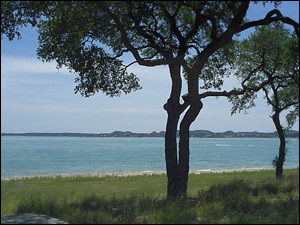
 Canyon Lake Waterfront Homes

 Searching the MLS







 TEXAS REAL ESTATE COMMISSION INFORMATION ABOUT BROKERAGE SERVICES